Disappointment Cleaver
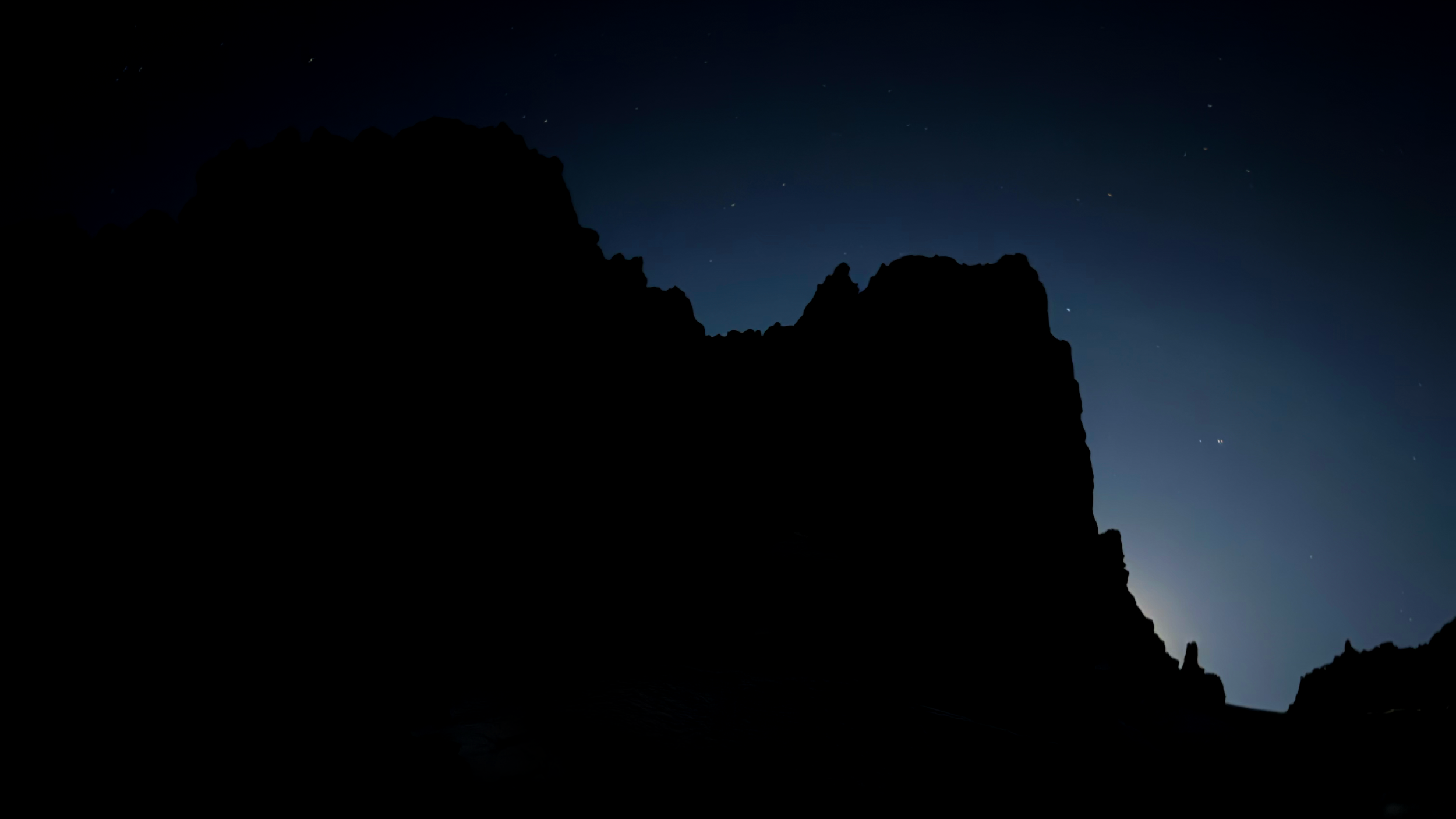
as seen from Ingraham Flats, the Cathedral Rocks are illuminated from behind by the moon
Ingraham Glacier, 11,200' 3:40am
The dark mass of the Cathedral Rocks loomed behind me to the south, its serrated profile silhouetted by the full moon. To the north, I could see what looked like a string of Christmas lights being pulled along the crest of a distant stone outcropping. These were the headlamps of the climbers ahead of our group as they made their way over Disappointment Cleaver, the exposed ridge of loose volcanic rock where we would be heading next.
We were sitting below the cleaver on a glacier of frozen ice. A team of guides had been sent ahead to scout the conditions of the route through this, the most dangerous part of the climb. Upon their return, they communicated to our group that they judged the risk to be too great. Instead of continuing toward the summit of Mount Rainier, we would be turning around and heading back.
I remember hearing no angry protest or disappointed sigh, only the sound of swishing nylon as insulated parkas were removed and stuffed into backpacks in preparation for our retreat back down the mountain.
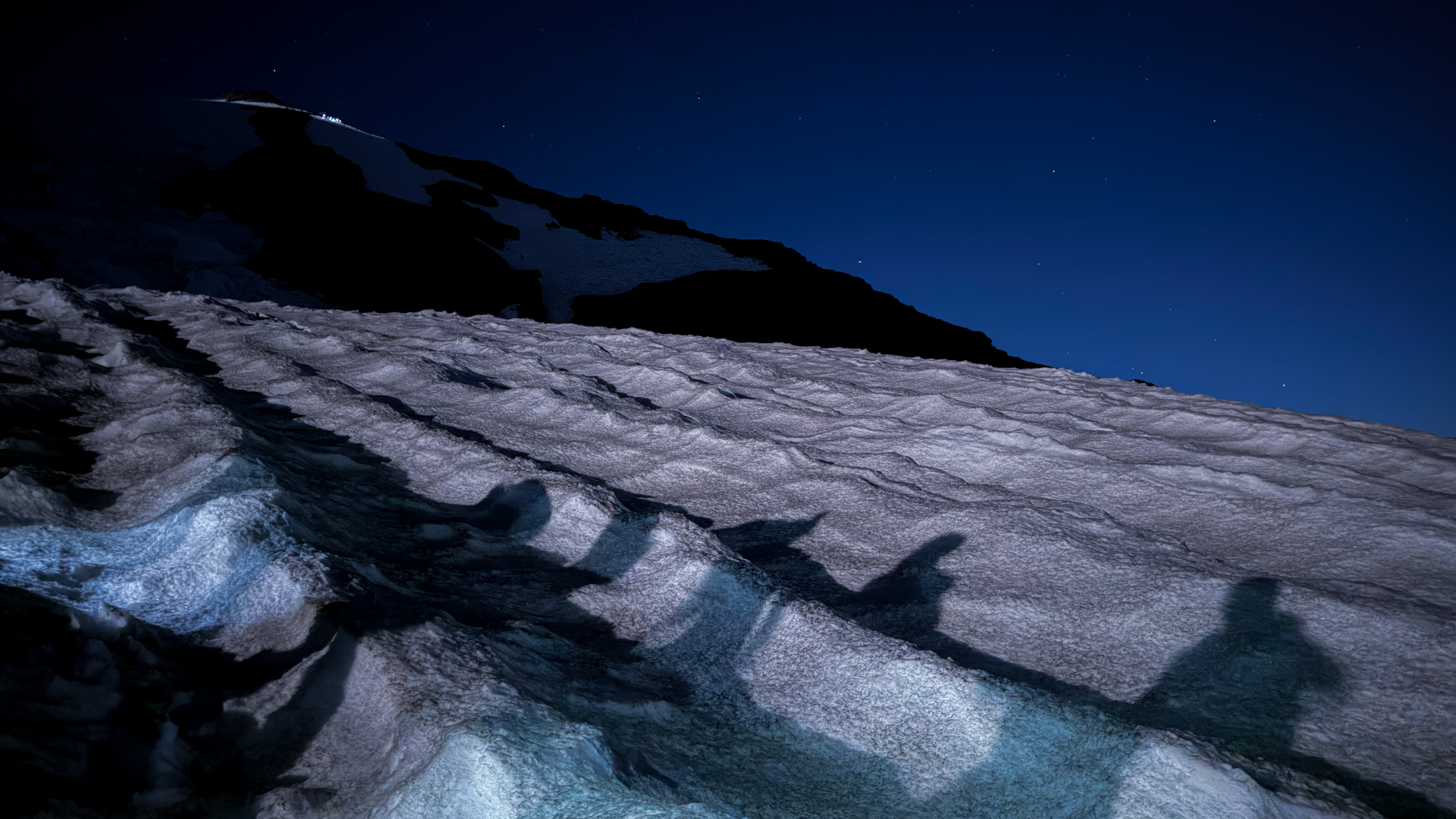
moonlight shadows cast by one group of climbers appear in the foreground while the headlamps of second group are visible on Disappointment Cleaver in the distance
I was born on the flat Blackland Prairie of North Texas. I lived for a time in northern Illinois and central New Jersey, neither of which is known for their topographic variation. I eventually settled in San Antonio which, although located near the Texas Hill Country, sits squarely on the plains of South Texas. Most of my life has been lived on flat plains and at low elevations. I would be well into my 40s before I began spending time in the mountains when, in order to escape the summer heat of Texas, my family began vacationing near Rocky Mountain National Park in Colorado. In addition to family hikes and trail rides, I would also occasionally head out into the mountains alone. A series of increasingly ambitious solo adventures culminated in a 2022 climb of Longs Peak.
For someone with limited mountaineering experience, I knew Longs sat at the edge of my physical and technical abilities. I trained for months before the trip and hired a guide fill in the gaps of skill and knowledge. That preparation paid off, and on a clear morning in early August, I stood at the 14,259’ summit of Longs Peak.
As clichéd as it may sound, the journey to the top of Longs Peak was far more memorable than the destination of its summit. Looking back now, the most indelible part of the climb was passing through the Keyhole, the cantilevered rock formation marking the transition from the more hike-like initial part of the ascent to the more exposed scramble up the last 1,000 feet.
Of course, I can say that the Keyhole was the “best” part of climbing Longs Peak because I did, in fact, climb all the way to the top of Longs Peak. I may have felt differently about the Keyhole—not to mention my overall experience—had I not summited.
After Longs, the trajectory of my climbing career began to resemble a plateau more than a mountain. Family vacations took us to places other than Colorado, where there were other adventures to enjoy. I also had an architecture office to run and children to parent. And so even if I wasn’t actively climbing mountains, the rest of my 40s were plenty busy.
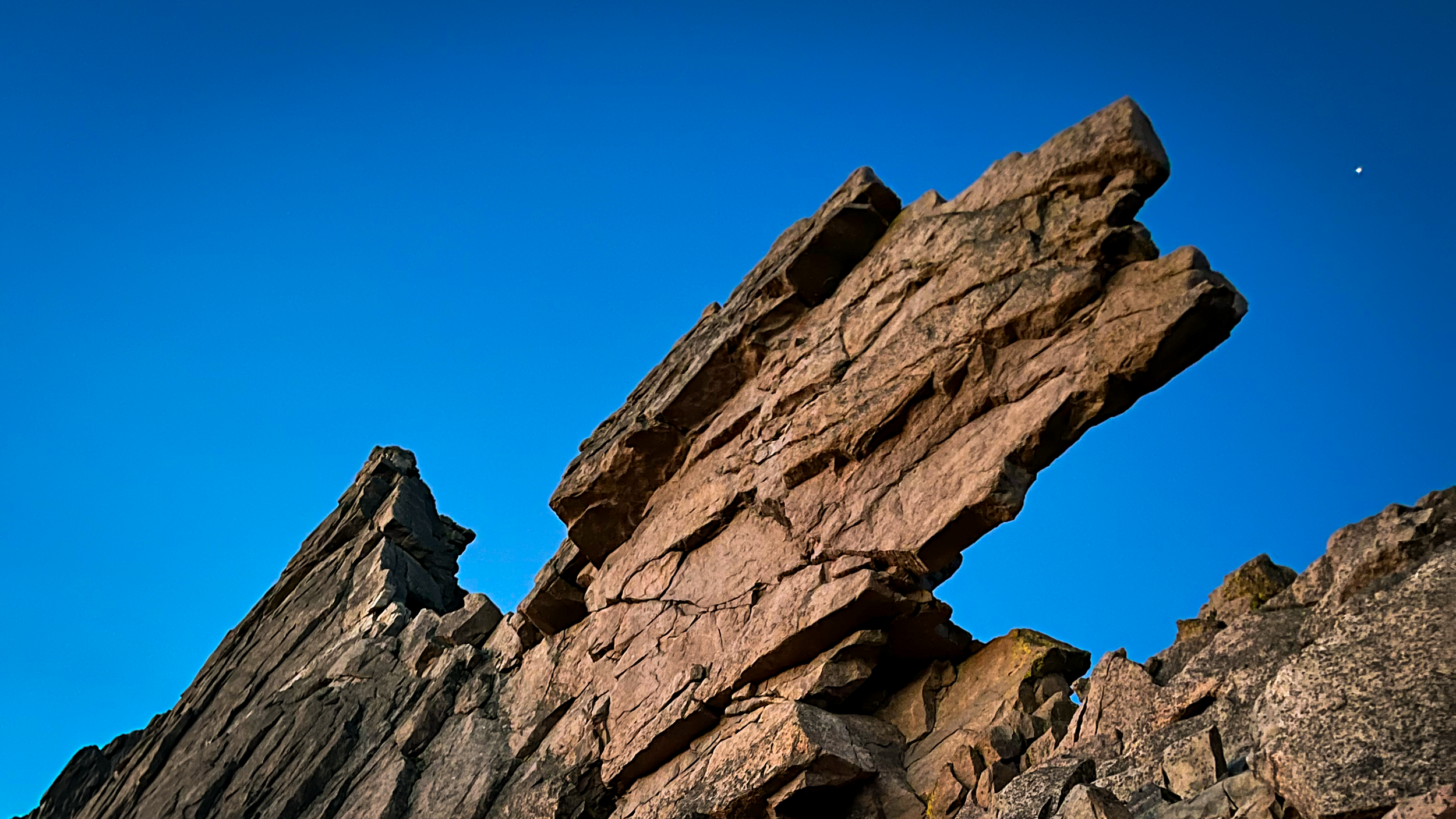
the Keyhole route up Longs Peak passes under the titular rock formation
A few days before Thanksgiving in 2025, my family visited Houston where we met met my cousin for lunch. She and her husband had just returned from a vacation in the Pacific Northwest that included a visit to Mount Rainier National Park. The trip had instilled in my cousin-in-law a desire to climb the park’s titular mountain and, knowing of my experience in the mountains of Colorado, asked if I wanted to join him in the mountains of Washington.
Rainier had never been on my radar, but over the long holiday weekend, I read multiple articles about the chain of stratovolcanoes that stretch from northern California into southern Canada. I learned that Rainier (or Tahoma, Takhoma, Ta-co-bet, or any of the many other indigenous names for the mountain) is both the most topographically prominent and the most heavily glaciated mountain in the lower 48 states. I found out about the guide companies licensed by the National Park Service to lead groups to its summit. I was reassured that their multi-day itineraries include training so that a couple of Texas flatlanders could safely participate.
By the time I returned home after Thanksgiving, summiting Mount Rainier had become something I also desired to do. After a few weeks of drafting potential itineraries, researching optimal weather windows, and calculating lunar cycles, a strategy was finalized. My family and I would fly into southern Oregon and spend a week slowly making our way north as part of our family’s summer vacation. I would then meet up with my cousin-in-law in Seattle to head to Mount Rainier while my family flew back to San Antonio.
And so by the first week of December, a deposit had been made to RMI Expeditions for a “Four Day Climb” to occur during the last week of July the following year. It felt good to have a clear a goal and eight months to prepare for it.
a goal is established for 2026
Cowlitz Glacier, 10,050’ 4:35am
It took us less than an hour to backtrack across both the Ingram and the Cowlitz Glacier. Once safely off the ice at Camp Muir, we unclipped our carabiners as our guides coiled the ropes that had tied us safely together. We dropped our backpacks along the stone wall that ran behind the plywood Client Shelter where we had awoken only a few hours before. As crampons and helmets were removed, our guides told us to go back to bed. In anticipation of 12 or more hours of strenuous climbing, I had ingested enough caffeine to ensure I would not be sleeping anytime soon.
The educated guesses made eight months earlier had proven to be correct: the weather at the end of July was ideal for climbing. It was also perfect for viewing the otherworldly landscape I now had time to appreciate. To the east, the sun had just begun to rise over the Cowlitz Glacier at the exact same just as the moon was setting over a sea of low clouds that stretched westward to the horizon.
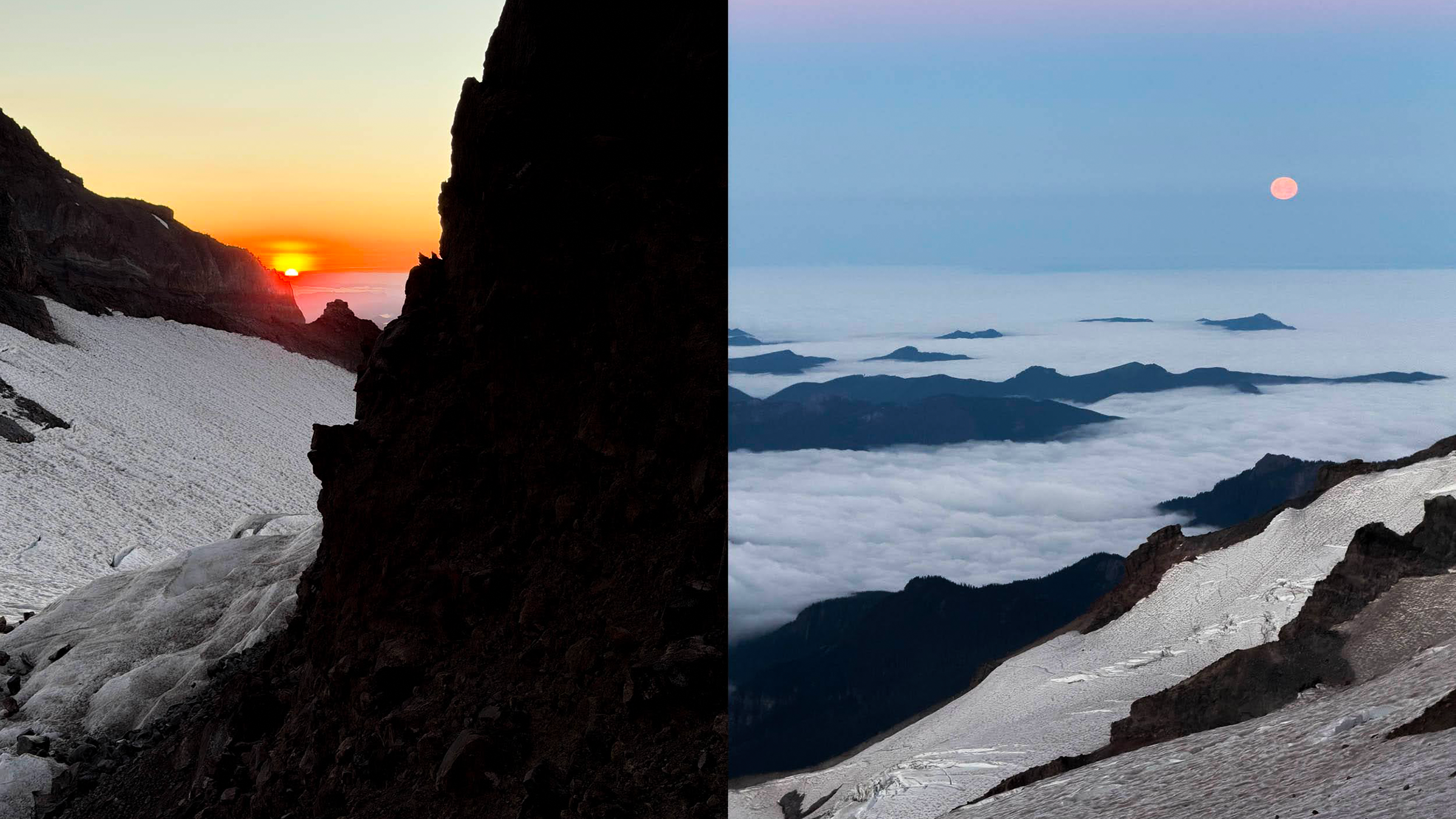
the sun rises over a glacier (left) while the moon simultaneously sets over a blanket of low clouds (right)
I was given an ice axe for Christmas that year. I kept an eye on sales and slowly acquired the climbing harnesses, soft-shell pants, and other specialized gear that would be needed on Rainier. I read books about mountaineering and watched videos about crevasse rescue. I taught myself to tie figure-eight knots and prussic hitches. I crafted a detailed training schedule to prepare for the physical demands of the climb. I trained for and then ran a half-marathon. I walked around San Antonio with a backpack filled with sandbags, eventually completing a 20-mile hike from one side of the city to the other. I joined Planet Fitness so I could spend hours on a bright purple StairMaster breaking in a pair of bright orange mountaineering boots.
To test my progress in real-world conditions, I climbed Guadalupe Peak in far west Texas. Because that mountain lacks snow, I flew to Colorado to take a “Snow Climbing Introduction” course on Pikes Peak. To verify I could sustain a multi-day trek, I traveled to Arizona to complete the “Rim-to-River” hike in Grand Canyon National Park.
In other words, much of 2026 was dominated by preparations for Rainier. The emphasis being placed on the climb wasn’t a conscious choice, but it could certainly be understood as a reaction to a compounding set of unrelated external conditions. If I was unable to inspire my clients to build anything architecturally exciting, I could motivate myself to spend another hour on the StairMaster. If I couldn’t control the long list of troubling events occurring geopolitically, I could carry a heavy pack on a long training hike. If I could do nothing to stem the rise of AI technology, I could do something to improve my chances of ascending Mount Rainier.
I didn’t realize this at the time, but this was adding up to a significant amount of extra baggage to carry up a mountain.
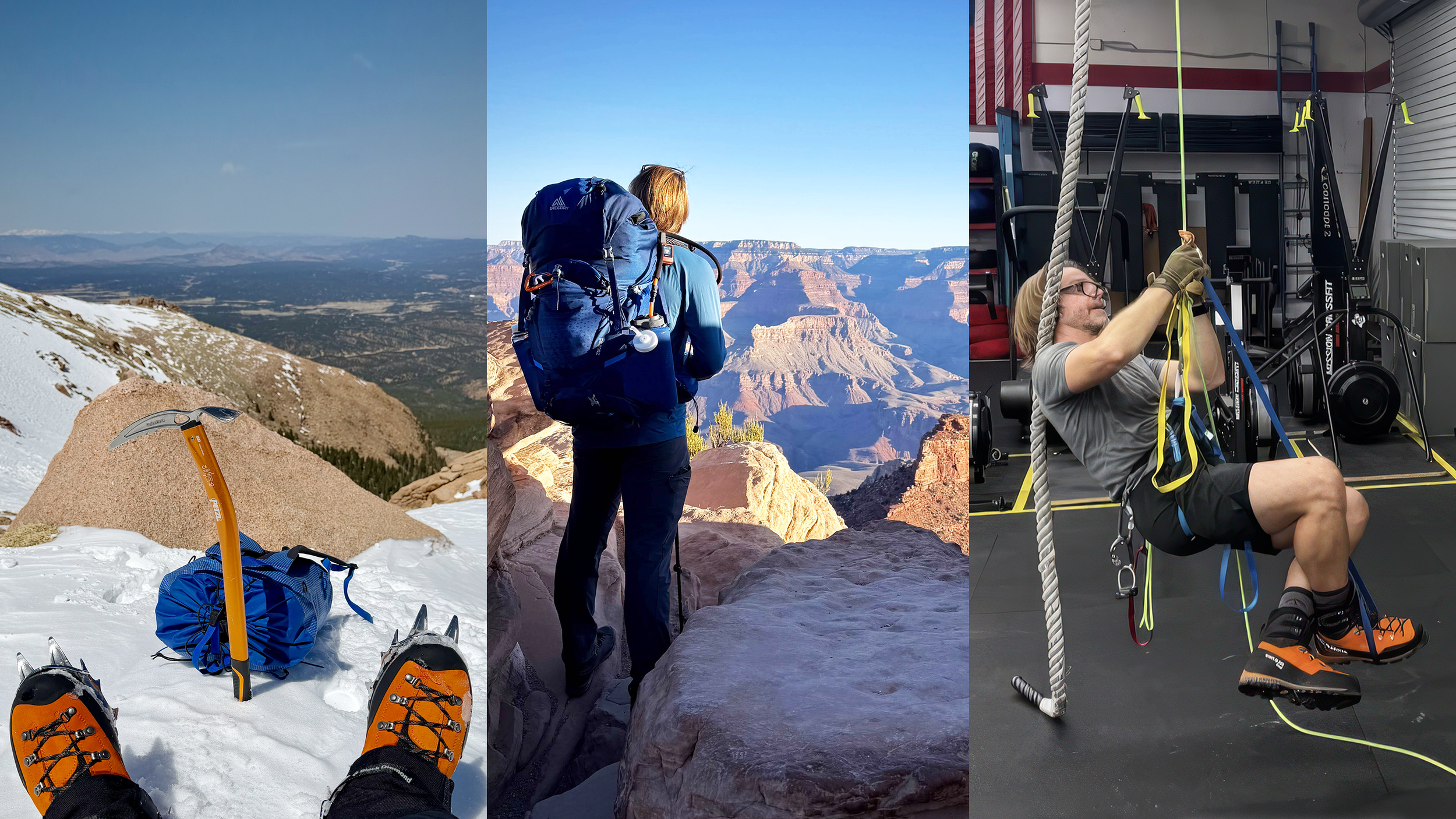
eight months of training proceeded the attempted summit of Rainier in July of 2026
Our family’s trip through Oregon and Washington was a good one. Crater Lake National Park was sublimely beautiful. In Eugene, my eldest daughter toured the University of Oregon campus while my youngest daughter visited the Cascades Raptor Center. At Mount Rainier National Park, my wife and I enjoyed hiking the Skyline Trail as it passed through meadows bursting with subalpine wildflowers. In Seattle, the Space Needle was photographed and the Monorail was ridden.
When we finally met up with my cousin-in-law at Pike Place Market, he confirmed that a series of injuries would prevent him from joining me on Rainier. And so when my family and I parted ways the following day, I headed back to Rainier alone.
I met my climbing team at RMI’s Basecamp where the program’s first day consisted of a few hours of basic introductions and gear review. The following morning we boarded busses that drove us to the same area of the Mount Rainier National Park where my family had stayed a few days earlier. We took the same Skyline Trail my wife and I had hiked, stopping at a snowfield where our climbing group received a few hours of basic mountaineering instruction.
The climb itself began on the third day when, for the third time in a week, I once again ascended the Skyline Trail. This time we continued onto the Muir Snowfield that took us to Camp Muir where we would stay overnight. We had hiked 4.5 miles and gained 4,800 feet of elevation. After sleeping for a few hours, we were awoken at midnight to begin our final summit push which was to consist of another 4.8 miles and 4,200 feet of elevation gain. We would complete less than a third of that before turning around at Disappointment Cleaver. After months of training for the glaciers of the upper mountain, I would spend less than an hour-and-a-half actively traversing them.
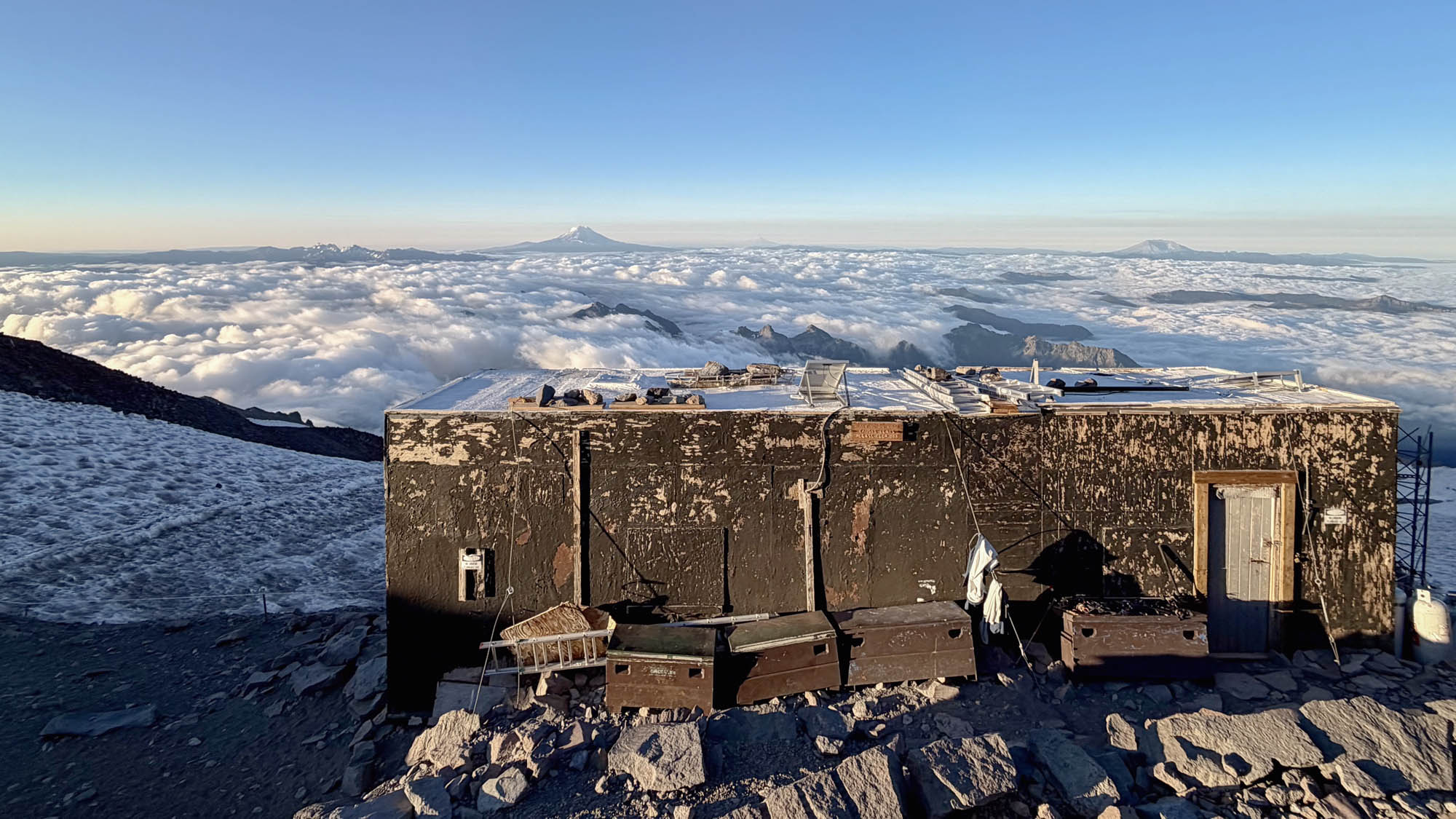
the Camp Muir Client Shelter with Mount Adams (left) and Mount St. Hellens (right) beyond
Camp Muir Ranger Hut, 10,100’ 6:00am
While the other climbers sleep in the Client Shelter, I followed a set of stone steps to the Ranger Hut where I sat on a ledge near its entrance. For the first time in months, I had absolutely nothing to do.
According to Blaise Pascal, all of man’s problems arise from his inability to “sit quietly in a room alone.” I may have been sitting on the side of a mountain, but the silence and the solitude nevertheless triggered a rush of unanticipated emotions. I was certainly disappointed to find myself sitting on a mountain as opposed to climbing it, but what I was feeling went beyond that. Summiting Rainier might not have major life goal, but other life goals were also beginning to seem unachievable.
I knew I would eventually come to appreciate my time on Rainier. In the coming months I’d probably even write a long, overly-sincere essay to overlay some larger narrative on the experience. I knew how to turn lemons into lemonade, but that didn’t mean I enjoyed drinking it.
And so, on the side of a beautiful mountain on a late July morning, I wept.
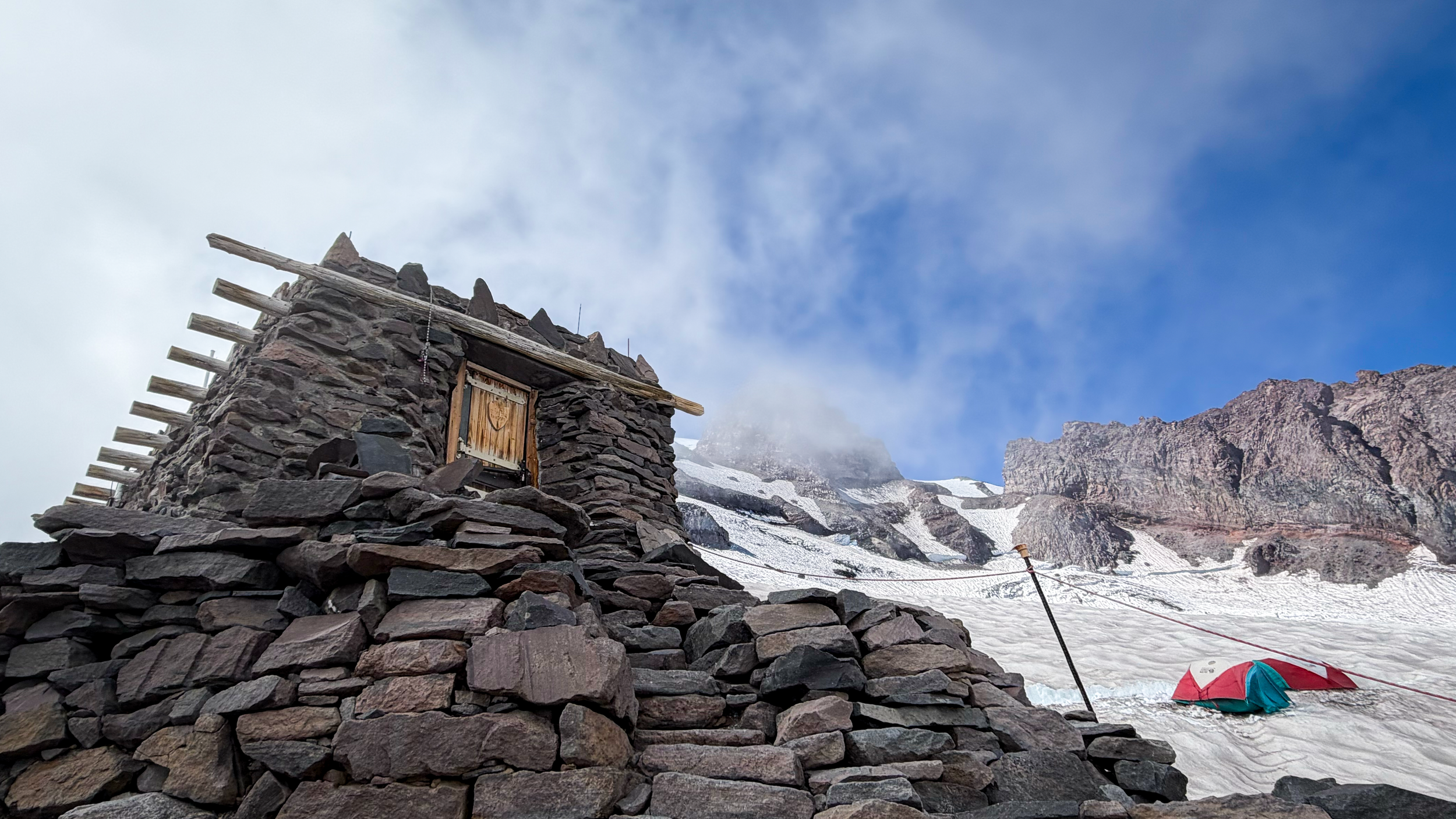
the Ranger Hut at Camp Muir
I am not the first person to sit on the stone steps of middle age and feel a vague, contradictory sense of disappointment. I knew then—just as I know now—that the list of things in my life that hadn’t turned out as I had hoped was far shorter than the vast inventory of things that had. Yes, I had acquired a handful of predictable physical ailments as I progressed through my 40s (presbyopia, back pain, back hair, etc.), but I was lucky that I was otherwise in good health. Yes, my work as an architect had grown unfulfilling, but it paid the proverbial bills while providing the flexibility needed to be an engaged parent. Yes, parenting teenagers could be a thankless, often confounding task, but it could also contain moments of unexpected delight. And so even if the routine of daily life sometimes felt Sisyphean, the climb provided the occasional vista of unparalleled beauty that justified the tedium.
There is a reason why a third-tier Greek myth like that of Sisyphus has endured as long as it has. You spend years preparing for an unknowable future, with countless days filled with the toil of rolling our individual boulders up our individual mountains. You might look up one day and find yourself on the side of a mountain and be unsure whether or not you’re climbing the right one. Even if you’re on the right mountain, you might find you’re unable to reach the summit despite doing everything you were supposed to do. Sometimes all you can do is be grateful for the view you were given, and drink the proverbial lemonade.
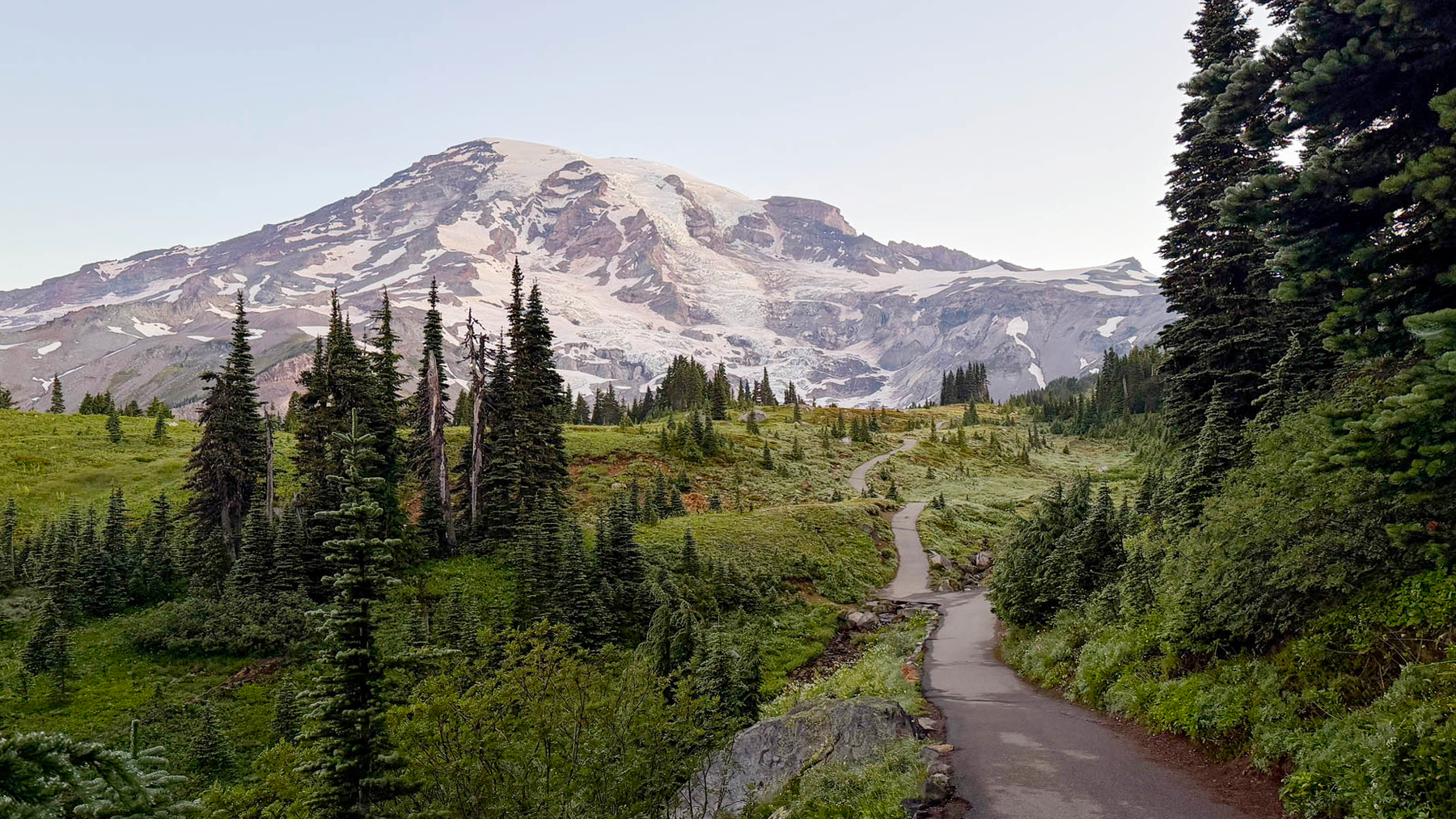
the Skyline Trail leads toward the Rainier National Park’s namesake mountain
I’ve had two months to craft a tidy narrative to make sense of my time on Mount Rainier. Depending on how you do the math, I only made it three-quarters of the way to the top: I spent a few hours on a glacier, saw a cool sunrise, and took some nice photos. But if I widen the frame to include a broader expanse of time and space, I see that even in failing to achieve a goal, the journey itself made the struggle worthwhile.
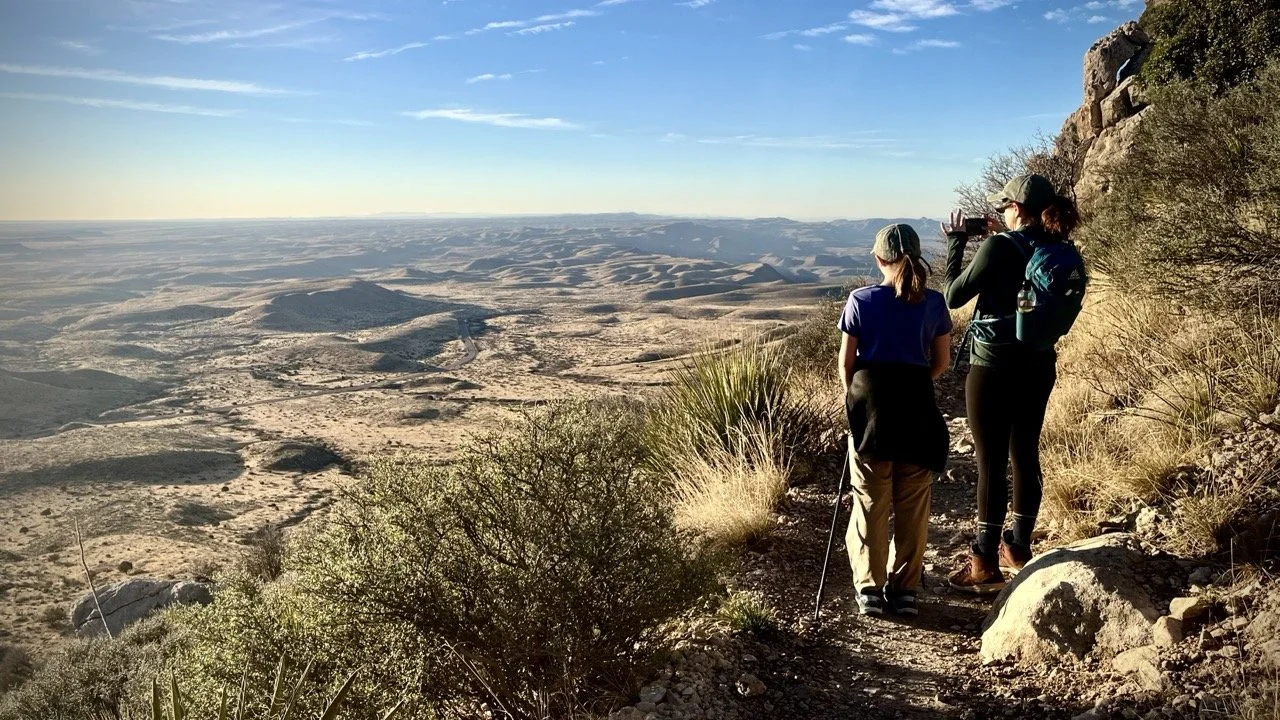
Without a reason to practice hiking up mountains in March, I probably wouldn’t have hiked with my wife and daughter to the highest point in the state of Texas:
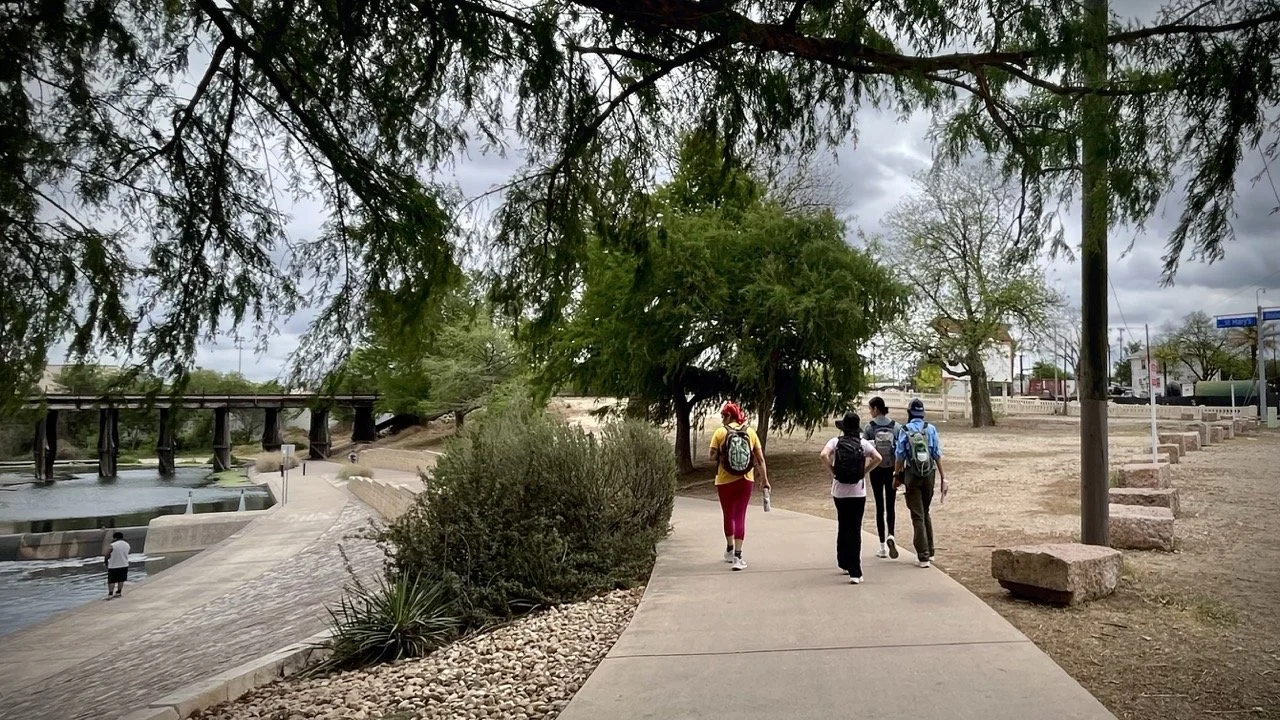
If I didn’t need to build up my endurance, I might not have been so eager in April to accompany a group of Scouts on a hike from one side of San Antonio to the other:
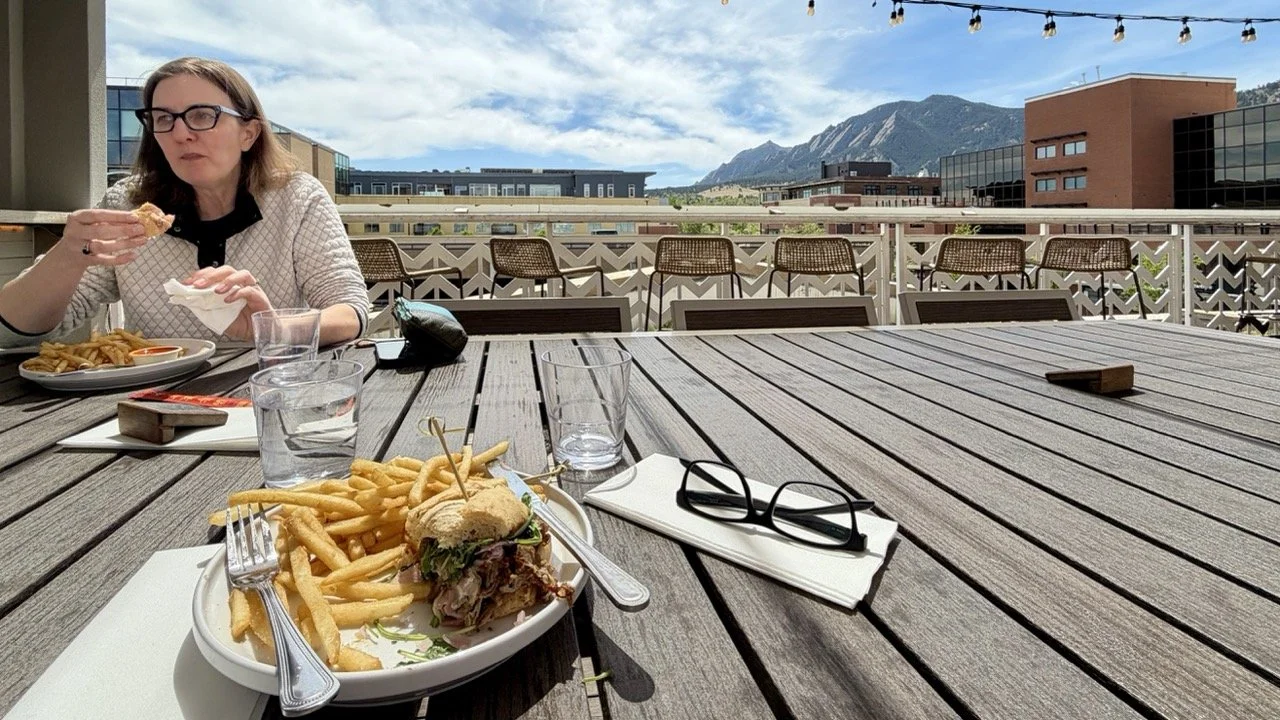
Had I not traveled to Colorado Springs in May work on my snow climbing skills, I wouldn’t have have the opportunity to visit friends there and in Boulder:
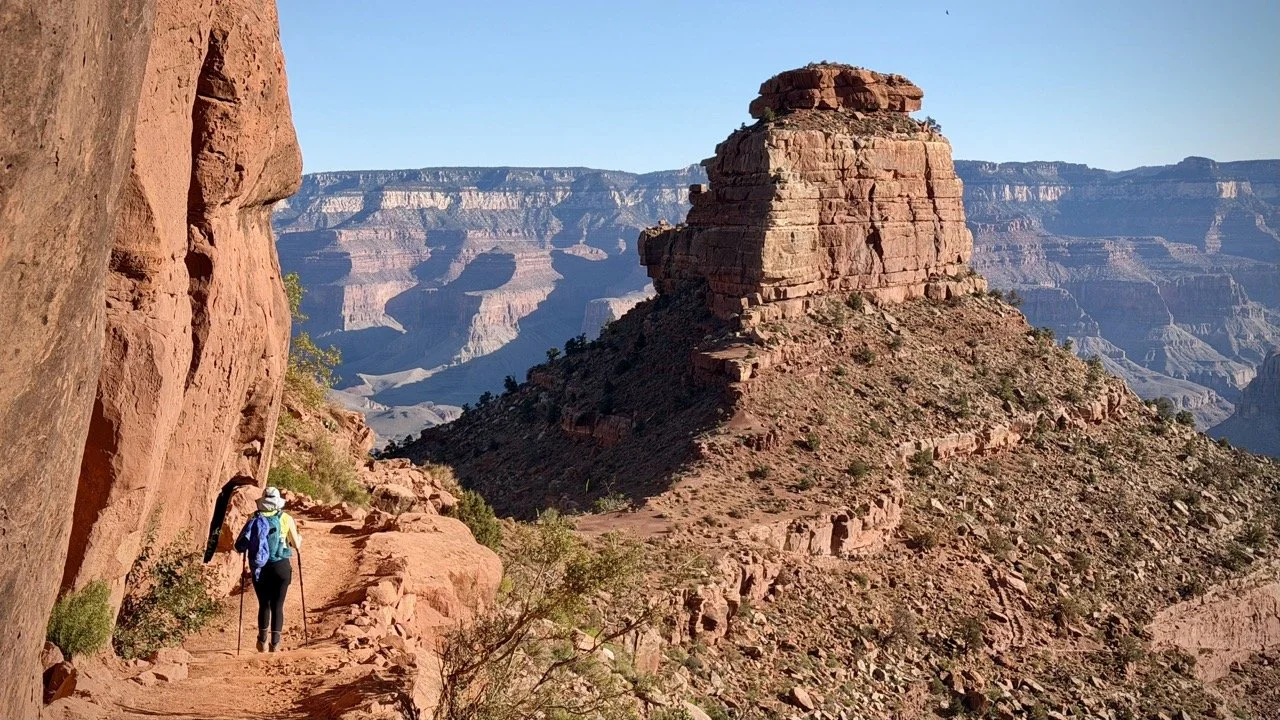
Lacking the motivation to test my multi-day hiking endurance in June, my wife and I wouldn’t have had an excuse to hike into (and back out of) the Grand Canyon:
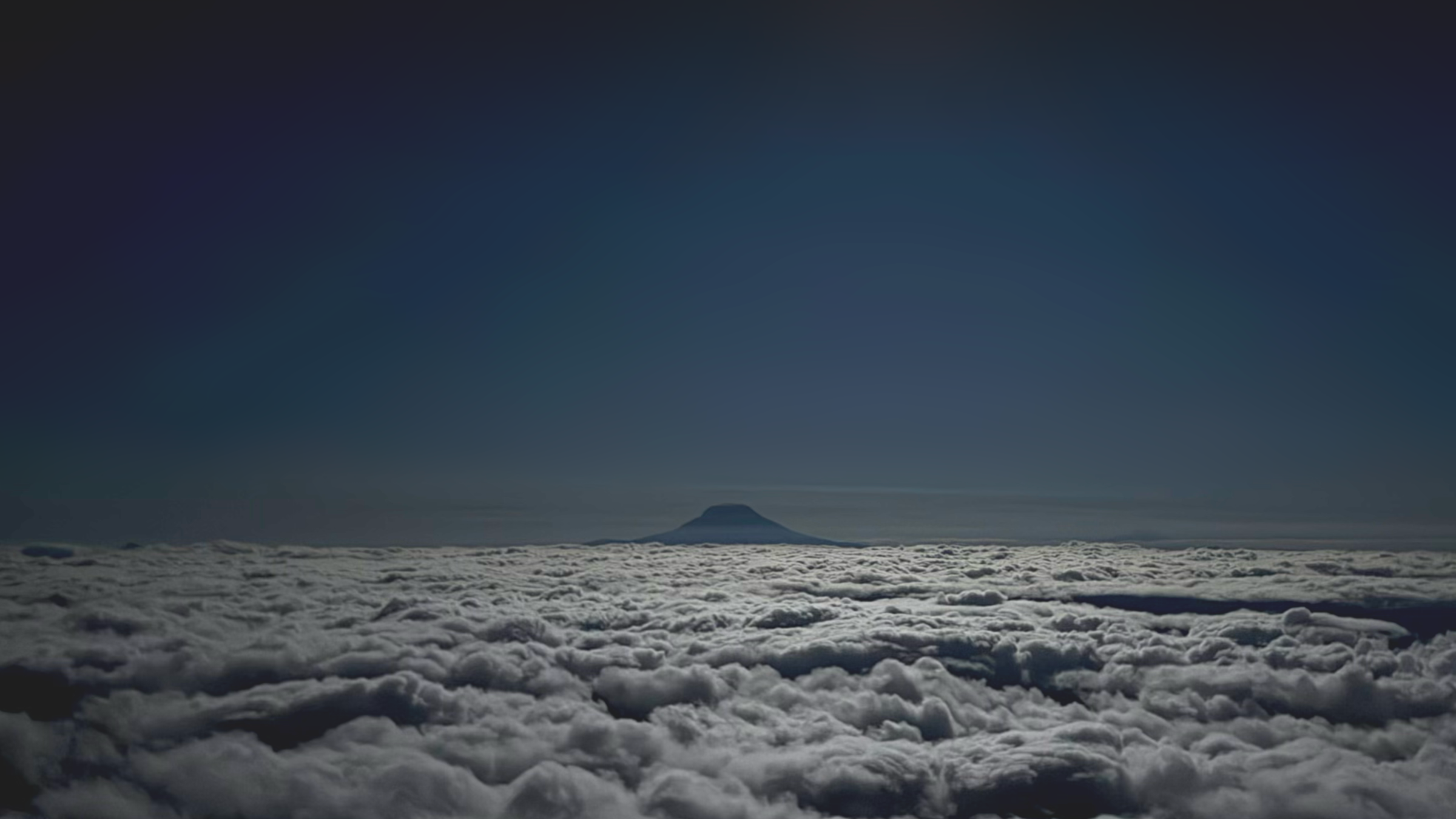
And had our climbing group not been awakened at midnight to begin our aborted summit attempt in July, I might never have seen a moonlit Mount Adams floating over a sea of clouds:
I have no idea where I am on the side of the mountain of life. From the vantage point of today, there is no way of knowing if I’ll make it to the summit of vaguely-defined greatness, or if I’ll soon be turned around due to trail conditions beyond my control. But what I do know is that even when failing to do great things, plenty of good can still happen along the way.
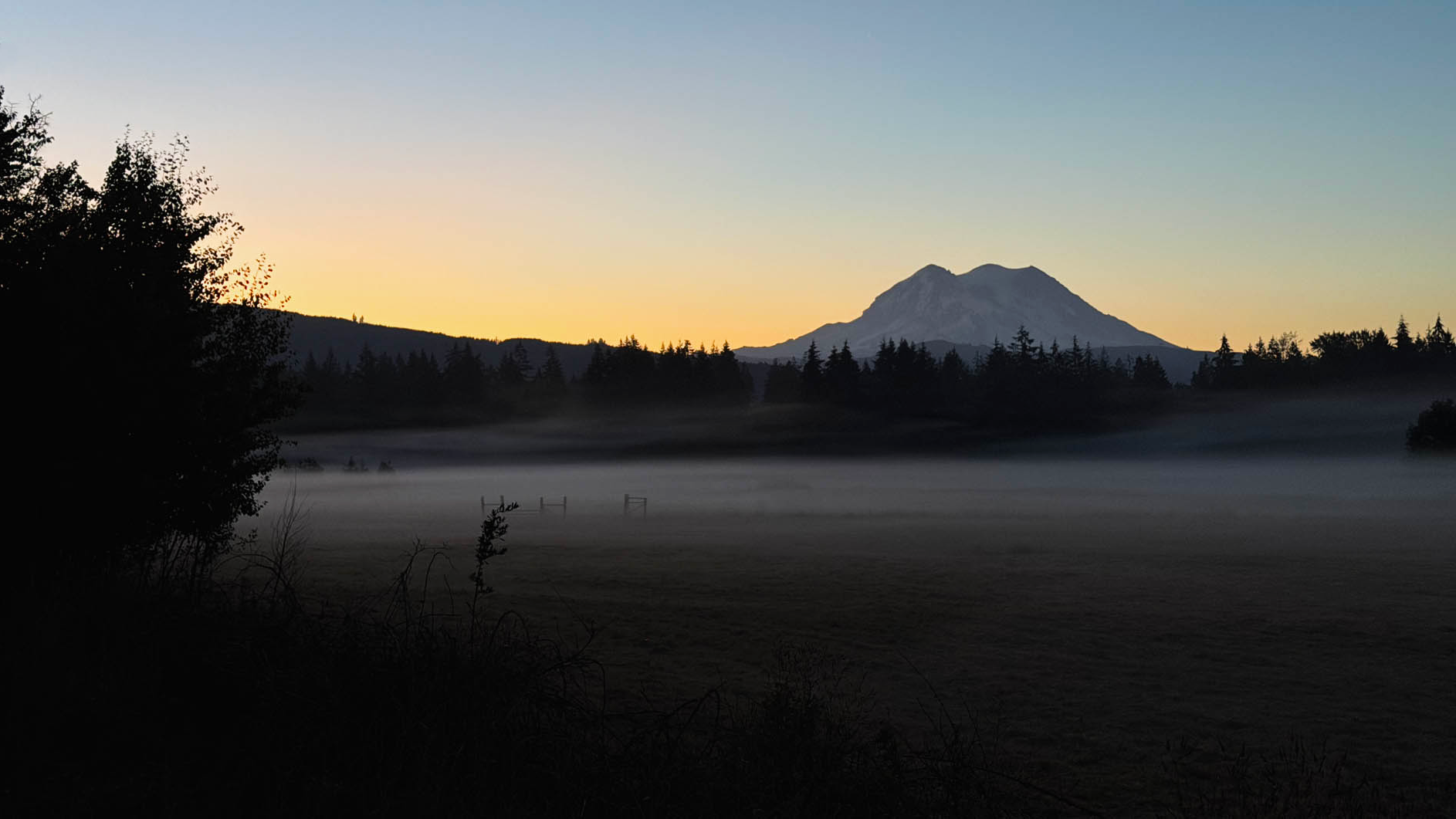
Mount Rainier in the early morning mist