Sketching with Wemby
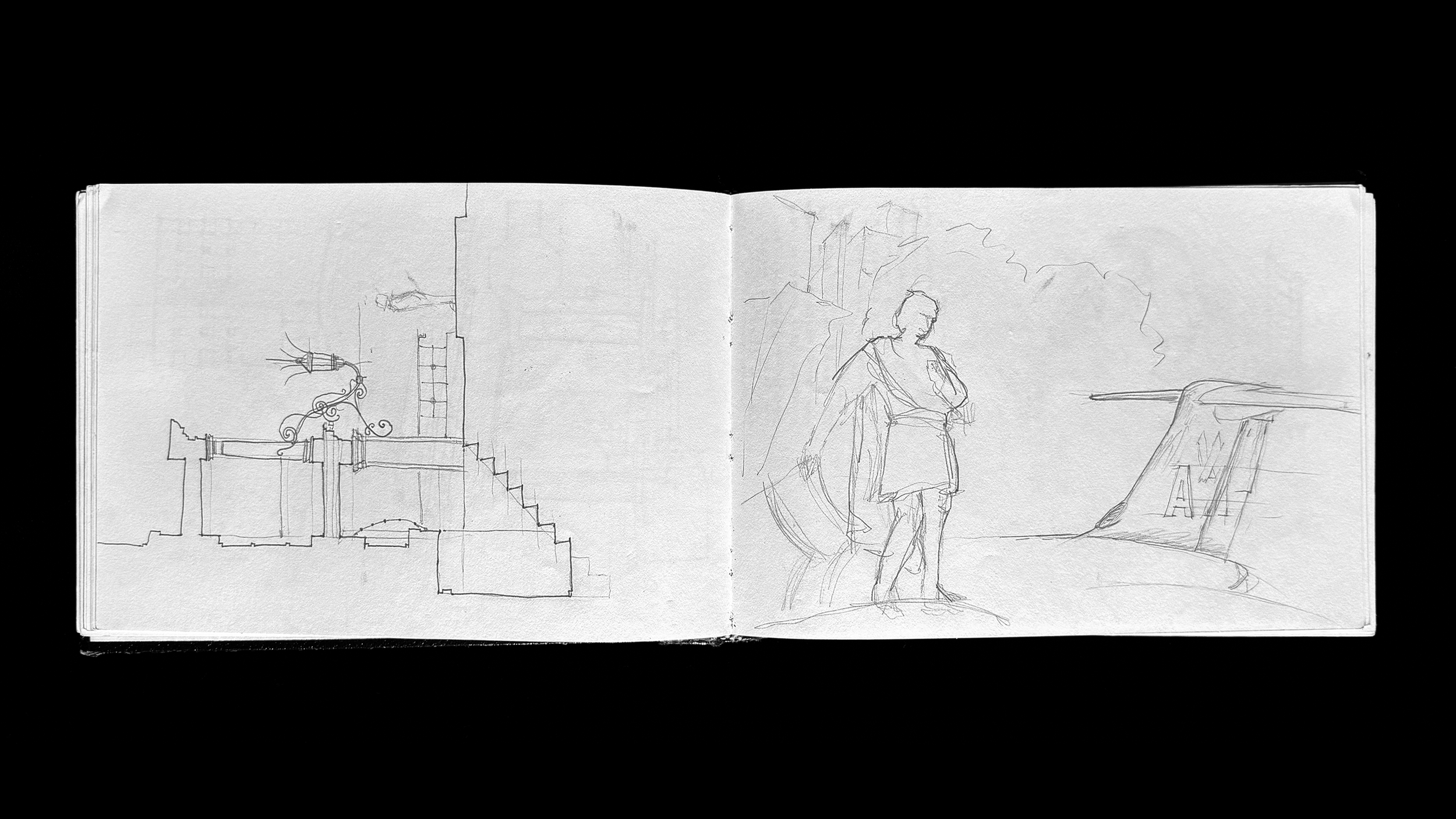
from left to right, entry section of 16 Gramercy Park South (rotated 90°), statue of Edwin Booth, tail empennage of McDonnell Douglas Super 80
In the summer of 1998, my brother and I visited New York City for the first time. Fearing we would book a cheap hotel in an unsafe part of town, our parents made our lodging reservations for us. The Gramercy Park Hotel might not have been as luxurious as it had been in its prime, but it still offered its guests keys to a private park located across East 21st Street.
Gramercy Park measures only 400 by 200 feet, about half the size of a standard Manhattan city block. With its well-manicured plantings and mature canopy of trees, it resembles many other city parks. At its center is a statue of Edwin Booth, a prominent nineteenth-century stage actor who is today known more for being the brother of Abraham Lincoln’s assassin.
I was 22 years old when I made that trip and was about to start my fourth year studying architecture at the University of Texas. In addition to spending time with my brother, my time in New York represented an opportunity to see first hand many of the places I had been learning about in my architectural history classes. The pages of my sketchbook from that trip feature drawings of familiar landmarks such the Empire State and Flatiron Buildings, but they also include more general cityscapes and diagrams as I tried to understand the unique urban character of New York.
On the final morning of our trip, I remained close to our hotel and explored the area immediately around Gramercy Park. I sketched the entrances of several of the residential buildings that faced the park and, before heading back to the hotel to check out and catch our flight home, I momentarily sat on a park bench to draw the bronze statue in the middle of Gramercy Park.
It was a quick, gestural sketch that, to be perfectly honest, was not very good. Then, as now, I draw buildings much better than I draw people.
In the summer of 2026, a video emerged showing Victor Wembanyama, the star center of the San Antonio Spurs, sitting on a park bench in Gramercy Park and sketching its bronze statue of Edwin Booth. Better known as “Wemby,” the 22-year-old French phenom would go on to lead the Spurs that evening to a 115 to 111 victory over the New York Knicks in game 3 of the NBA finals.
There was something endearing about a world-famous professional athlete taking a break from a high-stakes national championship series to sit next to his sister and draw. As he currently earns close to $14 million a year, Wemby could afford to do most anything, but instead he chose to hunch his spindly 7’-4” frame over a tiny sketchbook and draw the world around him.
In addition to his towering physical presence, Wemby is known for his transcendent ability to choreograph his movements through space in a ways that are graceful if not entirely human (hence his other nickname, “The Alien”). I fully acknowledge my limited knowledge of basketball, but I can appreciate a symmetry with the act of sketching. Both require a cultivated connection between mind and body. Both require concentration. Both create an artifact that is, arguably, beside the point.
For me, the goal of sketching isn’t to create an accurate recording of a statue or a building. If that were the goal, taking a photograph would be a much easier option. In architecture school we were taught that sketching requires you to notice details and relationships that might not be perceived otherwise. Combined with the physical act of translating those observations to paper, sketching commits those details and relationships to memory in a way merely taking a photograph does not. When I started writing this essay, I was surprised by how much I recalled about a trip that occurred nearly thirty years ago. In flipping through the pages of the sketchbook I carried with me on that trip, I realized most of those memories were tied to what I had sketched. Regardless of if a particular drawing ended up looking ”good” or “bad,” it formed memories that have fused with all the others I’ve made to help create the architect I am today. More important, they formed the human I am today.
I recognize the goal of basketball is to score more points than your opponent, but the sport is played by teams consisting of individual players. All of those players (like all of us) are on their own personal journeys. The outcome of this particular NBA Championship series will, of course, represent a significant event for the members of both the New York Knicks and San Antonio Spurs, but the experience of the series, the act of playing the game, will create memories that will fuse with others to form the humans (and/or aliens) they will be moving forward.
And for one particular human and/or alien, I hope he takes home a quiet memory of sitting in a park with his sister, surrounded by the chaos of tall buildings* and media frenzies, when he was able to take a moment to notice the beautiful details of the world around him.
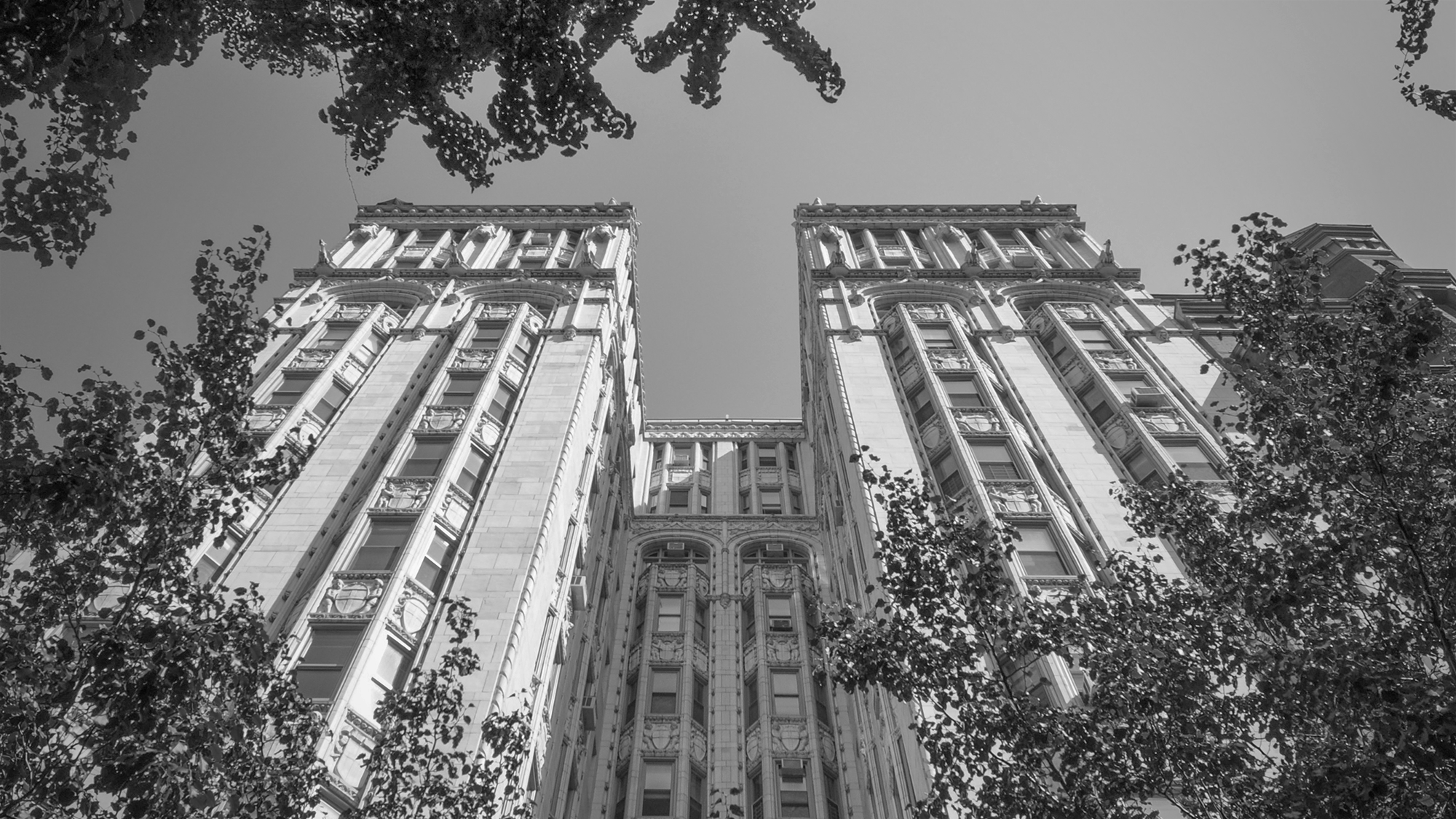
photo of 36 Gramercy Park East courtesy of Jeremy Boon-Bordenave
*As a side note, seated on that park bench in New York, Wemby found himself in the shadow of the work of a fellow San Antonian. Just over his right shoulder was the gleaming white terracotta facade of 36 Gramercy Park East. The 12-story apartment building was designed by James Riely Gordon who, like Wemby, might not have been a native Texan, but called the Alamo City home.
In the late 1880s, Gordon came to San Antonio to oversee construction of a new federal building. Gordon leveraged that experience to build an architectural practice that would create some of the most beloved county courthouses in the state. Eighteen ourthouses designed by Gordon would eventually be built throughout the state (including the Bexar County Courthouse in San Antonio).
Due to the success of these projects as well as the national attention he gained with the design of a pavilion at the 1893 World’s Columbian Exhibition in Chicago, Gordon relocated his practice to New York after the turn of the century. Professionally, his office was as successful in the Northeast as it had been in the Southwest, but his later work lacked the vitality of his earlier designs. In Texas he enjoyed the freedom to experiment. In New York, more established cultural expectations limited his stylistic range. Although Gordon’s talent would have probably found success wherever it landed, but it was a stroke of luck that he had the opportunity to hone his skills in the curiously fertile ground of San Antonio.
As Wemby considers his contract extension with the San Antonio Spurs later this summer, I would offer this piece of unsolicited advice: you should stay here. Our basketball team, like the city itself, might not be flashy, but it is a good place to do great work.